
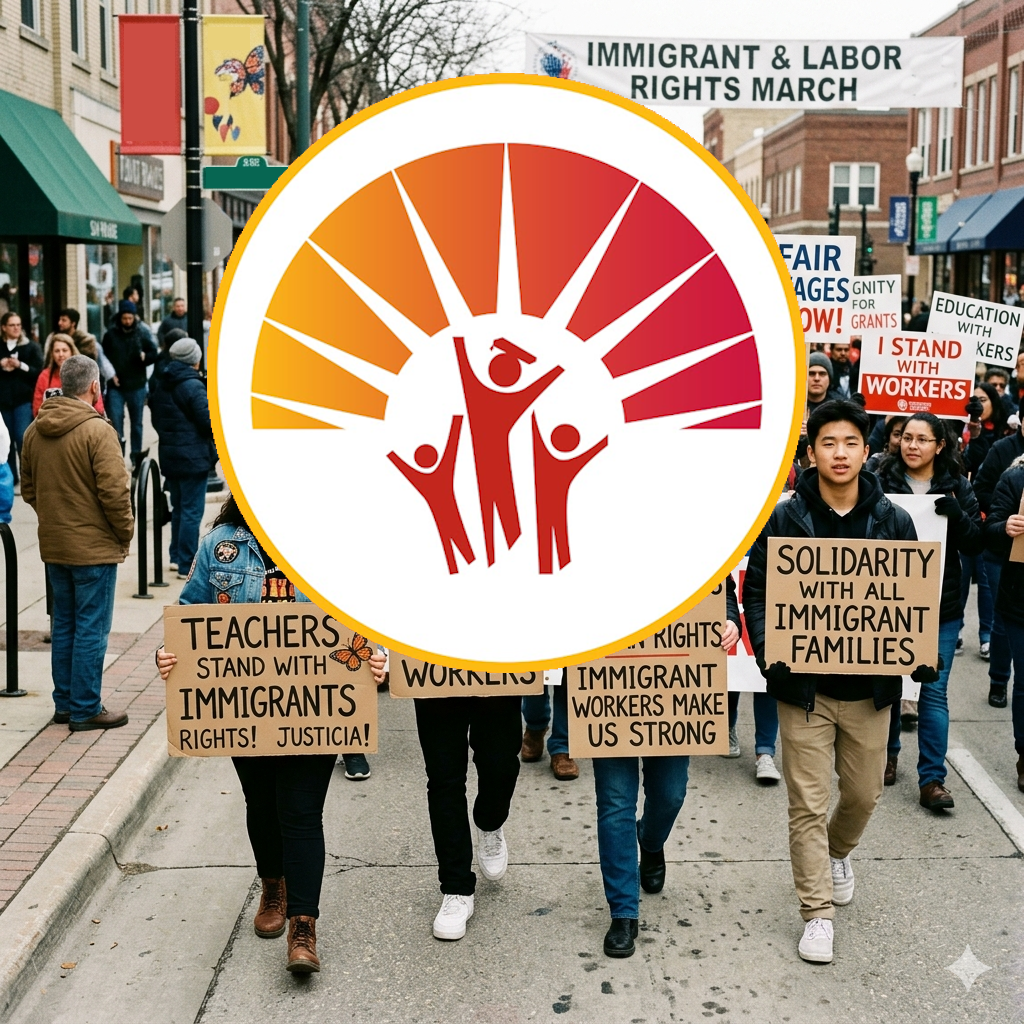
The Sun Prairie Area School District has announced it’s canceling classes for Friday, May 1. The reason: unusually high staff absences tied to planned demonstrations across Dane County.
The reaction on social media was, as usual, immediate, predictable, and visceral.
“Disgrace.”
“Fire all of them.”
“Refund our property taxes.”
“They should be named.”
There were legitimate concerns mixed in as well—parents scrambling for childcare, frustration about short notice, questions about whether students will need to make up instructional time. Those are real issues, and I agree the timing wasn’t ideal.
That frustration is understandable. But the sharpest criticism isn’t really about logistics—it reflects a deeper unease with the idea that public displays of differing viewpoints has a place in education at all. As if open expression was somehow anathema to learning.
Public education is not a subscription service where a missed day triggers a rebate. It is a system built on human labor, civic engagement, and the constitutional rights of the people who make it function. Suggesting that educators should be named or punished for engaging in lawful civic activity is not a serious idea. It is an emotional reaction masquerading as one.
The district did not cancel school to make a political statement. It canceled school because it could not safely staff its buildings. That is not ideological—it is operational, and responsible.
Across Madison and Dane County, May Day events—focused on labor solidarity and immigration rights—are expected to draw participation from all kinds of residents, including educators and students. Whether one agrees with those causes is beside the point. The right to assemble and protest peacefully is not conditional on public approval.
Nonviolent protest is not a footnote to democracy. It is one of its central pillars—explicitly protected by the First Amendment and repeatedly exercised throughout American history.
These are not fringe or extreme activities; they are part of a long-standing American tradition of public assembly and advocacy.
As Thomas Jefferson noted, “The spirit of resistance to government is so valuable on certain occasions, that I wish it to be always kept alive.” And Martin Luther King Jr. was even more direct: “Freedom is never voluntarily given by the oppressor; it must be demanded by the oppressed.”
Both statements, separated by nearly two centuries, point to the same enduring truth: civic participation is not always quiet, and it is rarely passive.
Why is it that we celebrate our leaders’ courage in hindsight—teach it in classrooms, quote it in speeches—but seem less comfortable when it appears in real time, especially if it complicates the daily schedule?
If schools have a responsibility beyond teaching basic facts—and they do—it is to help develop informed, engaged citizens. That includes exposing students (and their parents), directly or indirectly, to the reality that people participate in civic life in different ways, for different reasons.
The idea that civic engagement should be neatly confined to evenings, weekends, or “more convenient” times is less a principled stance than a preference for comfort. Persecution doesn’t operate on anyone’s calendar, so democracy won’t always fit neatly into ours either.
The district’s determination that it couldn’t safely operate given staffing shortages is practical and, ultimately, unavoidable. But the underlying cause of those shortages is valid, and it deserves to be understood rather than dismissed.
Even if you disagree with the substance of the demonstrations, the more productive response is curiosity, not outrage. What is happening that is motivating people to take time from work and gather in public spaces? What concerns are being expressed? What perspectives are being amplified?
Those questions are not a threat to our children’s education. They are central to it.
To dismiss May 1st as nothing more than a disruption misses an opportunity to engage in a healthy debate and to reveal a broader view of what education is meant to accomplish.
As the school year winds down, it’s worth remembering that 2026 marks the 250th anniversary of the Declaration of Independence—an important milestone that invites reflection on the very principles now being debated. The weeks leading into summer break are the ideal time for students to consider what it means to live in a society built on free expression, civic participation, and the right to dissent. These are not abstract ideals reserved for history books; they are habits of citizenship that must be observed, questioned, and, at times, practiced in real life.
If we are serious about preparing the next generation to participate in civic life, we should be careful not to model the opposite—indifference, or worse, irritation—when people choose to stand up for what they believe in.
The news here is not that school was canceled.
It’s that democracy, occasionally, shows up in ways that don’t fit neatly into the bell schedule.
by Andy Schoenherr
Editor, Sun Prairie Rising
Closing School May 1 Teaches the Right Lesson—

Read all Opinion from Sun Prairie Rising Here
.
Disclaimer: The views and opinions expressed in this column are those of the author. References to the Sun Prairie School Area District and use of their logo or imagery do not reflect the official policy, position, or endorsement of the Sun Prairie Area School District or its administration.
Never miss a story from Sun Prairie Rising!
Subscribe to our newsletter and get a summary sent to your email once a week.
